
The 2026-2027 season of Fédérale 3 is unlike any other. The FFR has confirmed that this season will not lead to traditional promotions to the higher level. The matches this season are used to determine which clubs will join the future Promotion Nationale starting from 2027-2028, and which will be relegated to regional levels.
Amateur pyramid reform: why Fédérale 3 is disappearing
The term “Fédérale” itself is on borrowed time. The FFR is ending this historic designation for national amateur championships starting from the 2027-2028 season. The new pyramid is organized around four levels: Nationale, Nationale 2, Nationale 3, and Promotion Nationale. The latter will take on the role of the current Fédérale 3, at the sixth national level.
The direct consequence for the clubs participating this season is clear: it is no longer about “promoting” in the traditional sense. The teams ranked in the Top 8 of each pool will secure their place in Promotion Nationale. The others will be reclassified to regional divisions, which represents a significant downgrade for clubs that have sometimes been structured around a federal project for several years.
This shift transforms the very nature of each championship matchday. Following the live results of Fédérale 3 takes on a different meaning when each match impacts survival in the national sphere rather than just a simple race for promotion.

Fédérale 3 pool rankings: what the results really mean
In a traditional championship, the last matchdays pit promotion candidates against each other in direct confrontations at the top of the standings. The 2026-2027 season reverses this logic. Attention is drawn as much to the middle of the table as to the top of the pool.
A club ranked ninth or tenth plays for its federal survival with every away game. The difference between eighth and ninth place in a pool is no longer measured in prestige, but in access to a national level. For the teams involved, a home match against a direct competitor in the mid-table becomes as crucial as a final.
Three criteria that weigh on the final ranking
- The offensive bonus retains its usual importance, but it can tip a club on the right side of the qualification line when the gaps are tight between seventh and tenth place
- Direct confrontations between closely ranked clubs serve as tiebreakers in case of points equality, making the results of home-and-away matches between pool rivals particularly scrutinized
- Home consistency remains a discriminating factor for amateur clubs, where long trips weigh on squads often limited in bench depth
The results of each matchday thus redraw the map of clubs that will remain within the federal fold. A misstep at the end of the season can cost a club several years of rebuilding if relegated to regional.
Schedule and decisive matches: identifying high-stakes games
The Fédérale 3 schedule includes matchdays where ranking stakes are concentrated. The last days of the regular phase, traditionally rich in suspense, take on an unprecedented dimension this season as the massive reclassification of clubs replaces the usual promotion-relegation logic.
Matches between clubs separated by one or two points in the standings attract the attention of followers. In several pools, historic clubs of amateur rugby find themselves needing to secure their place in the Top 8, far from the comfort their track record might suggest.
Follow the scores in real-time
Specialized platforms like the FFR website (Mon Club House) or media dedicated to federal rugby offer score updates during matches. Live tracking allows for immediate assessment of the impact of a result on the ranking of an entire pool, as several matches are played simultaneously on Sunday afternoons.
For supporters of clubs engaged in the race for the Top 8, checking the results of other matches in the pool has become a reflex. A bonus point taken by a direct competitor on the other side of France can change the game in a matter of minutes.
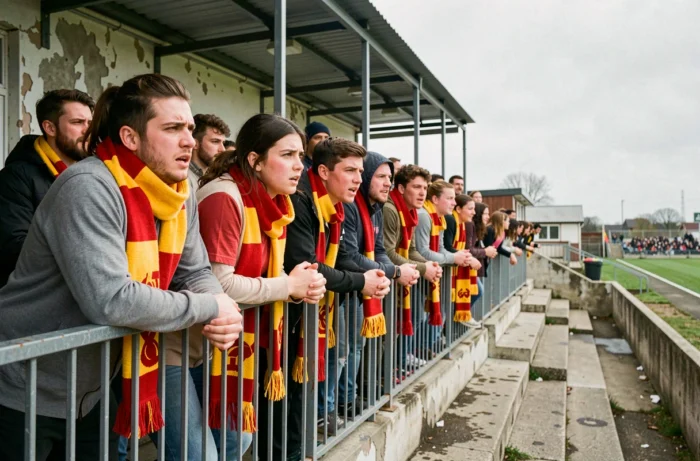
Transition season in Fédérale 3: which clubs are under pressure
The reform creates particular pressure on two categories of clubs. On one side, the clubs recently promoted from regional to Fédérale 3 that have not yet consolidated their squad or finances at the federal level. On the other, clubs that have been established for several seasons but whose results stagnate around the gray area of the standings.
Analyses published in late July and early August 2026 highlight that this transition season redistributes the cards beyond the field. Budgets, recruitment, and sports projects have been conceived within a framework that will disappear. Some clubs have invested to maintain themselves in a championship that is changing its name and format, without any guarantee that their structure will suffice for Promotion Nationale.
Amateur players, often volunteers or semi-compensated, experience this uncertainty in a concrete way. A relegation to regional can lead to departures to better-positioned clubs, further weakening the squad for the following season.
The stakes of the last matchdays
Field reports diverge on the ability of all concerned clubs to maintain their level of mobilization until the end of a season whose qualification rules have been modified mid-cycle. The motivation of amateur squads remains the most unpredictable factor when the goal is no longer promotion but survival in a system undergoing major reform.
Each championship Sunday brings its share of results that clarify the outline of the future Promotion Nationale. For clubs ranked between sixth and tenth place in their pool, the season will not truly end until the last matchday, when the final ranking will determine their future in French federal rugby.