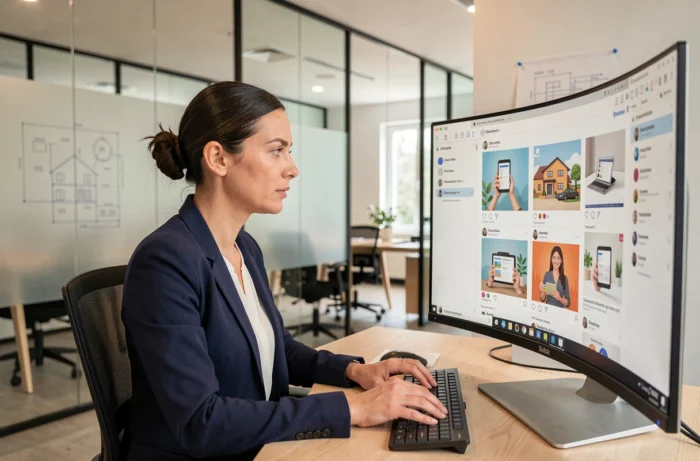
Motion design refers to the creation of animated graphics, combining typography, illustrations, and transitions to produce short video sequences. When applied to real estate, this format serves to present properties, explain devices, or assert the visual identity of an agency on social media.
Regulatory Constraints of Real Estate Motion Design
Before discussing visual impact, a video presenting a property for sale or rent remains a real estate advertisement subject to legal obligations. An Instagram Reel or a fifteen-second TikTok does not escape this rule. The price, fees, and for the relevant properties, the energy and climate classes from the DPE as well as the estimated annual energy expenses must be displayed clearly.
This requirement directly impacts graphic design. DPE mentions must appear in color and remain legible on mobile screens. Animations that are too fast or transitions that obscure this information can render the video legally unusable.
Therefore, motion design requires planning for a final screen that is sufficiently legible to display the mandatory mentions. The areas covered by the platform interfaces (share buttons, progress bar) must also be considered when placing the text. An article detailing the role of motion design for real estate social media reminds us of this interplay between visual creativity and legal framework.
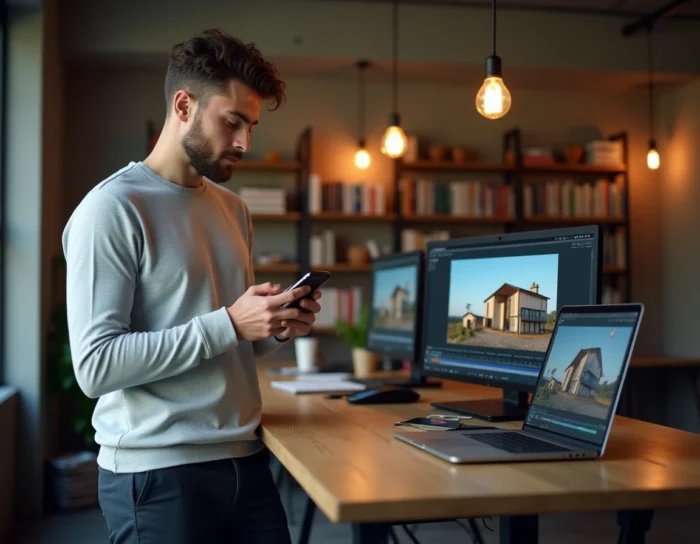
Motion Design and Native Formats of Real Estate Social Media
Each social platform has its own technical specifications. An animated visual that performs well on Instagram may not necessarily work on LinkedIn or Facebook without adaptation.
Adapting Duration and Ratio to the Network
Instagram Reels and TikToks favor the vertical 9:16 format, with durations ranging from fifteen to sixty seconds. Facebook accepts more varied formats, while LinkedIn prefers 1:1 or horizontal 16:9 for posts in the news feed.
Motion design offers a concrete advantage here: a vector source file can easily be adapted into multiple ratios without loss of quality. The same animation for presenting a new program can be exported vertically for Instagram and square for LinkedIn from the same project.
The Weight of the First Second
On social feeds, the decision to watch or scroll is made in the first second. Motion design allows for the creation of a strong visual hook (a number appearing, an animated shot unfolding, a recognizable brand color) without requiring video shooting.
For a real estate agency, this means being able to produce animated content regularly without mobilizing a shooting team for each publication. The speed of production, compared to a video filmed with a drone and edited, represents a significant operational gain.
What Motion Design Brings Compared to Static Photography in Real Estate
Photography remains the standard for real estate listings. Motion design does not replace it but covers uses that still images cannot fulfill.
- Visually explaining a floor plan or layout by animating rooms, circulation flows, and openings, where a photo only shows a fixed angle
- Highlighting a neighborhood by combining animated maps, transport pictograms, distances, and travel times in a sequence of a few seconds
- Communicating about properties in VEFA (sale in future state of completion) for which no real photos yet exist, relying on plans and architectural perspectives
- Affirming the visual identity of the agency through a graphic charter applied to each video, with an animated logo, consistent color palette, and typography
This last point deserves special attention. On social media, visual recurrence builds recognition. An agency that publishes animated videos recognizable at first glance stands out from generic listing feeds.
Transparency and Mention of Commercial Collaboration on Social Media
Real estate agencies that work with content creators or influencers to distribute their motion design videos must comply with the rules of transparency regarding commercial collaborations. French law requires that any paid publication or partnership be clearly identified as such.
Instagram and TikTok offer native tools for partnership mentions. Failing to use them exposes the agency and the creator to penalties. This constraint also applies when a real estate agent shares content produced by a third party in exchange for payment or a benefit.
Motion design facilitates the integration of these mentions into the visual flow of the video, in the form of an animated banner or overlaid text, without breaking the rhythm of the graphic narrative. Integrating the legal mention into the design rather than treating it as an unsightly addition is part of the design work.
Concrete Limitations of Motion Design for Agencies
Motion design is not a universal format. Some situations call for other approaches.
A high-end property with noble materials, exceptional brightness, or a remarkable environment often benefits more from being shown in a filmed video. Motion design excels at synthesizing, explaining, and graphically appealing, but it does not convey the texture of an old parquet floor or the depth of an unobstructed view.
The production cost also varies significantly depending on the desired level of detail. A simple typographic animation costs a fraction of the price of a scripted motion design with custom illustrations. Agencies that are just starting can begin with customized templates before investing in original creations.
Motion design works best in a regular communication strategy rather than in one-off use. A single animated video published in isolation rarely generates measurable impact. It is the repetition, graphic coherence, and adaptation to the codes of each platform that build the difference over time.