How do the French actually spend their free time in 2025, and which activities are gaining ground against traditional pastimes? Recent data reveals clear shifts in preferences, with a rise in autonomous sports practices and a relative decline in sedentary leisure activities. This article compares the trending activities and pastimes that structure free time today, based on measured developments in recent years.
Leisure Activities on the Rise: Comparative Table of Recent Trends
Surveys from the National Barometer of Sports Practices (INJEP) show a clear reorganization of sports leisure activities between 2018 and 2025. Rather than listing ideas without hierarchy, a comparative approach allows us to visualize what is rising and what is stagnating.
| Activity | Trend 2018-2025 | Typical Profile | Entry Cost |
|---|---|---|---|
| Walking, hiking | Strong growth | All ages, independent practice | Very low |
| Trail running | Rapid growth (increased participants and races) | 25-45 years, regular practice | Moderate (equipment) |
| Cycling (road and gravel) | Continuous growth | Urban and suburban | Moderate to high |
| Gentle gymnastics, yoga | Regular growth | Mostly female, all age groups | Low |
| Escape room | Stable after strong growth | Groups, families, teams | Medium (per person) |
| Spa, wellness relaxation | Sustained demand | Couples, solo | High |
The common thread among the rapidly growing activities is flexible scheduling, low cost, and practice without mandatory structure. Hiking and trail running illustrate this dynamic. For more information on shop-mania.info, the leisure categories reflect this diversity among sports, creative, and experiential practices.
Trail Running and Hiking: Why These Sports Leisure Activities Dominate Free Time
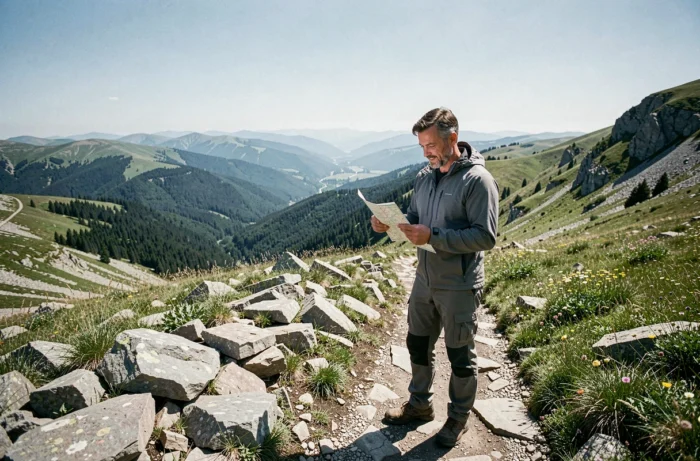
The INJEP Barometer interprets the rise of autonomous sports leisure as a direct response to scheduling constraints. Walking, jogging, and trail running require no reservations, no partners, and no fixed time slots.
Trail running has seen a double-digit increase in the number of participants in recent years. The number of organized races in France in 2025 far exceeds that of 2024, and the number of FFA license holders declaring trail running as their main activity is rapidly increasing over three years.
This growth is not limited to seasoned athletes. Trail running attracts a recreational audience looking for a structured activity, with a goal (a race, a course) without the rigidity of a club. In contrast, hiking remains the most universal activity: accessible from the first step, it involves all age groups and all levels of physical fitness.
What Sets Trail Running Apart from Other Outdoor Sports
- A rapid increase in the volume of activities recorded on sports tracking platforms, indicating regular and not occasional practice
- A multiplication of local events that structure the sports season, from spring to autumn
- A limited entry cost, requiring only a pair of suitable shoes and a hydration pack, whereas cycling or skiing demands a heavier investment
Slow Tourism and Mountains: Vacation Leisure Activities Redefining Free Time
Free time is not limited to weekends. Vacations also reveal clear shifts in activity choices. Slow tourism is gaining ground in France, with trips focused on tranquility rather than the accumulation of visits.
Reports conducted in Dordogne and Landes describe vacationers explicitly seeking to slow down: fewer movements, less packed schedules, more time spent in one place. This phenomenon is accompanied by a renewed interest in mountain stays in spring, identified as a strong trend by several analyses in the tourism sector.
Spring in the Mountains: A Growing Niche
Mountain getaways in spring are clearly on the rise, driven by a demand for nature, calm, and controlled costs compared to high-season resorts. This niche attracts a variety of profiles: families, couples, remote workers extending a weekend.
In contrast, distant stays and all-inclusive packages are losing relative attractiveness. The French are adapting their vacations towards closer and cheaper options, without sacrificing the quality of the experience. The French mountains, with their hiking trails and accessible accommodations, capture part of this demand.
Creative Workshops, Escape Rooms, and Spas: Experiential Leisure vs. Sports Practices
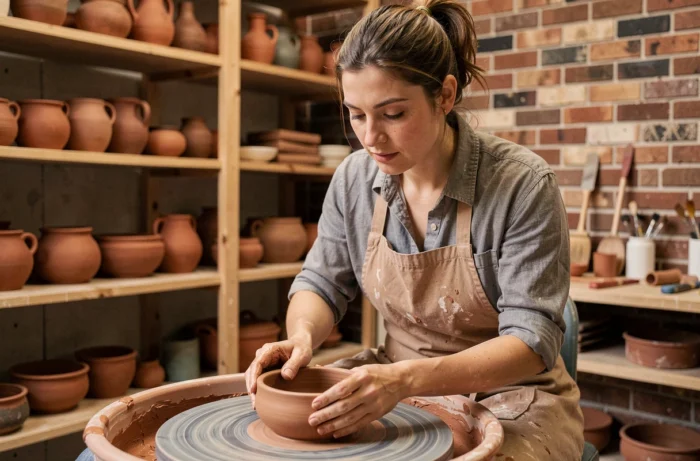
So-called experiential leisure activities (escape rooms, creative workshops, spas) maintain a stable place in the landscape of leisure activities. Their dynamics differ from autonomous sports practices.
The escape room remains a popular activity for team or family outings, but its growth has slowed after the post-pandemic peak. The market is mature, with a dense offering in major cities like Paris, Lyon, or Bordeaux. Differentiation comes through theming and the integration of immersive technologies.
Spas and wellness activities continue to see sustained demand, driven by the search for relaxation and burnout prevention, especially among remote workers. Practices like sophrology or outdoor yoga fit into this trend, at the intersection of leisure and health.
What the Gaps Between Sports and Experiential Leisure Show
Autonomous sports activities are growing faster because they meet three criteria simultaneously: low cost, total flexibility, and measurable health benefits. Experiential leisure, on the other hand, remains tied to occasions (birthdays, vacations, team outings) and a higher budget per person.
This distinction does not mean that one replaces the other. Both types coexist in a typical schedule, but data shows that the frequency of practice strongly favors autonomous activities. A hiker goes out every week, whereas an escape room enthusiast books a few sessions a year.
The trending leisure activities in 2025 cannot be reduced to a list of ideas. They outline a profile of free time where regularity takes precedence over occasional events, and where the cost-benefit ratio guides choices more than novelty. Trail running, hiking, and cycling capture this dynamic. Experiential leisure retains its place, but in a complementary register, that of exceptional outings rather than weekly routines.