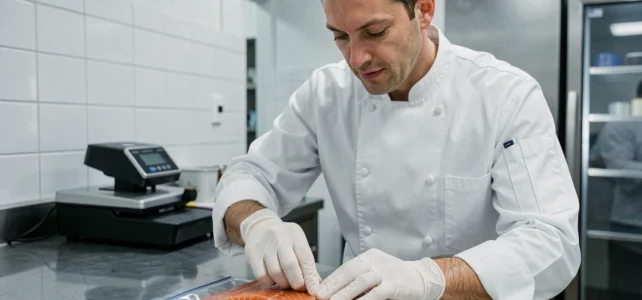
Vacuum packaging removes the air around the fish and seals it in an airtight bag. This process slows down the oxidation of fats and inhibits the growth of most aerobic bacteria. The result: an extended shelf life in the refrigerator compared to simple plastic wrap. However, vacuum sealing is not an absolute shield, and several factors determine whether the preservation gain will be real or illusory.
Initial freshness of the fish: the factor that vacuum sealing cannot compensate for
A vacuum-sealed bag does not regenerate a degraded fillet. The benefit of vacuum sealing directly depends on the condition of the fish at the time of packaging. A fish purchased on the day of its arrival, with red gills, a bulging eye, and firm flesh, will gain several days of preservation. A fish that has been sitting on the counter for two days, even if perfectly packaged, will remain close to its limit.
Before vacuum sealing, check the smell: it should remind you of iodine or seaweed, never ammonia. If the flesh leaves a lasting imprint when you press it with your finger, degradation has already begun. Vacuum sealing this fish will only trap the bacteria already present in a closed environment.
The vacuum preservation of fish in the refrigerator extends the shelf life by a few days when the product is packaged right after purchase, provided that the cold chain has not been broken between the fish market and the kitchen.
Refrigerator temperature for vacuum sealing: why the cold zone changes everything
Vacuum sealing slows oxidation, but does not compensate for a temperature that is too high. Most domestic refrigerators display temperatures between 4 and 6 °C in their main compartment. For fish, this range is insufficient.
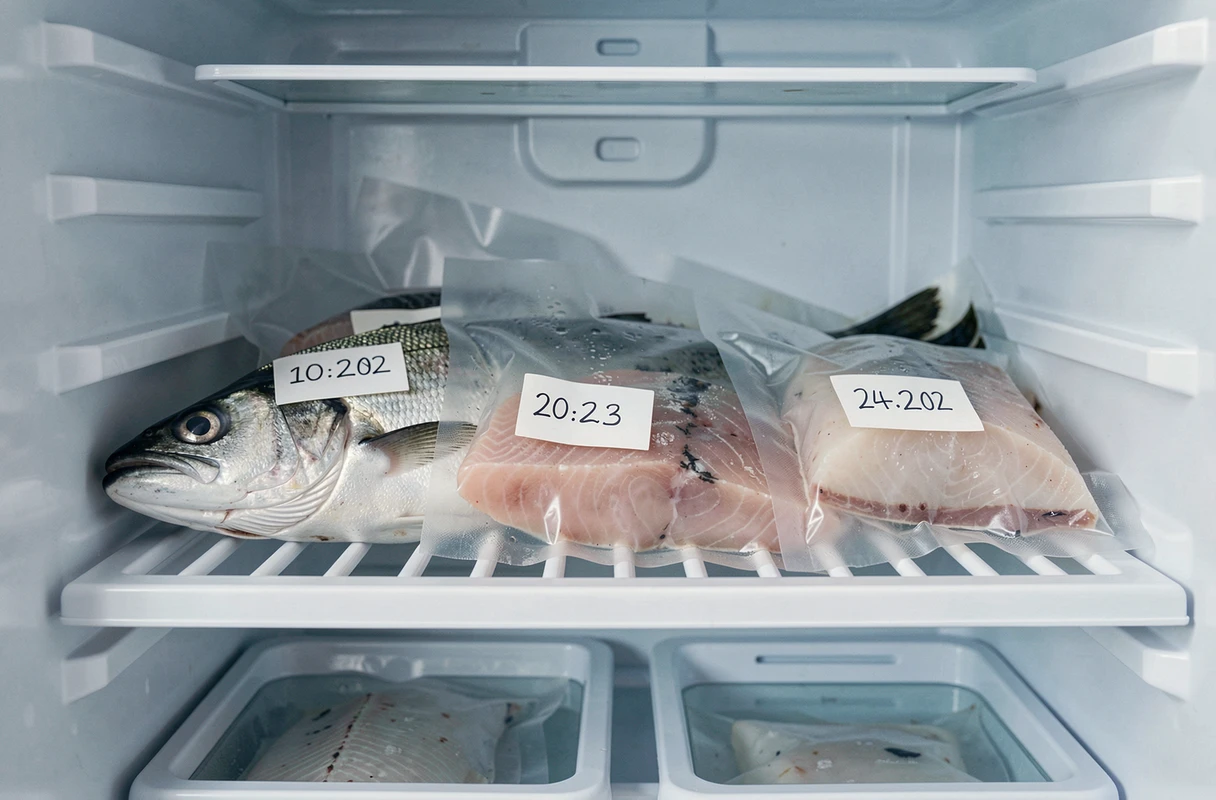
The goal is to keep the product as close to 0 °C as possible without freezing it. In a conventional refrigerator, the coldest zone is generally located on the bottom shelf, just above the vegetable drawer. Some models have a drawer dedicated to sensitive products, set between 0 and 2 °C: this is the ideal location.
Check the actual temperature of the refrigerator
A thermometer placed in the refrigerator for a few hours often reveals discrepancies with the value displayed on the control panel. If the coldest zone exceeds 4 °C, the preservation gain provided by vacuum sealing is significantly reduced. A vacuum-sealed fish stored at 6 °C degrades almost as quickly as a conventionally packaged fish at 2 °C.
Managing juices and cross-contamination in the vacuum bag
Fish releases exudates, even when vacuum sealed. These juices accumulate at the bottom of the bag and create a humid environment conducive to bacterial proliferation if the product remains too long in the refrigerator. This operational parameter is often overlooked.
Three precautions limit this risk:
- Place the vacuum bag in a shallow container or on a plate to prevent any leaks from contaminating other foods in the refrigerator.
- Use a rack or a small bed of crushed ice under the bag: this keeps the fish cold and prevents it from resting directly in its liquids, preserving the texture of the flesh.
- Check the integrity of the bag daily. A bag that swells after a few days is a sign of abnormal bacterial activity: the fish should no longer be consumed.
These simple actions also reduce odors in the refrigerator. A well-sealed vacuum bag placed on an appropriate support maintains a clean environment around the product.
Clostridium botulinum: the specific risk of raw vacuum-sealed fish
The absence of oxygen in a vacuum-sealed bag promotes Clostridium botulinum, an anaerobic bacterium that produces toxins responsible for botulism. Raw fish is one of the foods most exposed to this risk, as the spores of this bacterium are naturally found in aquatic environments.
Vacuum sealing removes air, which inhibits aerobic bacteria. But it simultaneously creates an oxygen-poor environment, exactly the one in which Clostridium botulinum can germinate and produce its neurotoxins. Refrigeration slows this process without completely stopping it.
Cooking or freezing: two responses to this risk
Cooking to the core destroys botulinum toxins. For fish intended to be eaten raw (sashimi, tartare, ceviche), pre-freezing is the recommended safety method. Freezing the fish before vacuum sealing it for raw consumption helps neutralize parasites and limit bacterial growth during storage in the refrigerator.
A raw fish simply vacuum-sealed and placed in the refrigerator without a freezing step poses a real health risk, even if its appearance and smell seem correct.

Shelf life of vacuum-sealed fish in the refrigerator: concrete guidelines
Durations vary depending on the type of fish, its initial freshness, and the actual temperature of the refrigerator. Here are some practical guidelines:
- A whole fresh fish or fillets, vacuum sealed on the day of purchase and stored between 0 and 2 °C, generally lasts a few days longer than a fish wrapped in conventional film.
- A cooked fish that is then vacuum sealed benefits from a longer shelf life in the refrigerator, as cooking has already reduced the bacterial load.
- Fatty fish (salmon, mackerel, sardines) oxidize faster than lean fish, even when vacuum sealed. Their shelf life remains shorter.
- Any bag that swells, any sour or ammoniacal smell upon opening requires discarding the product without hesitation.
Vacuum sealing is not a substitute for freezing for long-term storage. Beyond a few days in the refrigerator, freezing at -18 °C remains the only reliable method for long-term preservation.
The quality of the bag and the machine used also plays a role. A bag that is too thin or an incomplete seal allows air to gradually enter, negating the benefits of packaging. Ensure that the bag remains well pressed against the fish throughout the storage period.