
Consulting Leakimedia does not automatically trigger criminal proceedings. The legal distinction that truly matters concerns the user’s level of involvement: passive browsing, registration with the collection of personal data, or payment for premium access. Each tier generates a different level of traceability and legal exposure, and most articles on the subject amalgamate these three situations.
Exploitable digital traces: passive consultation versus active registration on Leakimedia
Simply viewing a web page leaves limited technical traces. An IP address in the server logs, a session cookie, possibly a browser identifier. Under French law, these elements alone are not sufficient to characterize an infringement of copyright. The offense requires an act of unauthorized reproduction, representation, or distribution, not mere viewing.
Registration changes the game. By creating an account on Leakimedia, the user voluntarily provides an email address, sometimes a phone number. This data constitutes a proof of nominative identification far more exploitable than a dynamic IP. If the forum is subject to a judicial seizure or a data breach, each registered account becomes traceable.
Payment for premium access adds an additional layer. Banking details or transactions via digital wallets create a direct link between the user’s civil identity and the platform. We observe that this type of trace is the one investigators prioritize in procedures related to digital infringement. To learn more about Charlotte Haffner’s Leakimedia leaks, several recent analyses detail this gradation of risks precisely.

Copyright infringement and invasion of privacy: the applicable criminal framework for leaks
Two distinct criminal qualifications may apply depending on the nature of the content viewed and the user’s actions.
Copyright infringement (Articles L335-2 and following of the Intellectual Property Code) penalizes the reproduction or distribution of protected works without authorization. On Leakimedia, the content mainly comes from platforms like OnlyFans or MYM, where creators hold the rights to their publications. Sharing or redistributing content from these platforms constitutes a characterized act of infringement.
The invasion of privacy (Article 226-1 of the Penal Code) targets the capturing, recording, or transmission of intimate images without consent. This qualification is independent of copyright and can apply even if the content is not a “work” in the legal sense.
- Consultation alone generally does not fall under either of these qualifications, unless it involves downloading (which constitutes reproduction)
- Sharing, even by a simple link to content already online, can be requalified as complicity in distribution
- The explicit request for a specific leak on a forum (the famous “requests” visible on Leakimedia) can be interpreted as incitement to infringement
In practice, prosecutions primarily target uploaders and platform administrators. Simple visitors rarely face individual proceedings, but this procedural reality does not equate to legal immunity.
Mirror sites and phishing: the security risk ignored by Leakimedia users
The most concrete and immediate risk for the majority of visitors is not criminal. It is technical. Several Telegram channels report the existence of fraudulent mirror sites posing as Leakimedia, designed to capture login credentials and banking data.
The platform itself uses aggressive advertising redirects. These intermediary pages serve as vectors for phishing attempts and malware installation. A user clicking on a download button may trigger the execution of a malicious script without being aware of it.
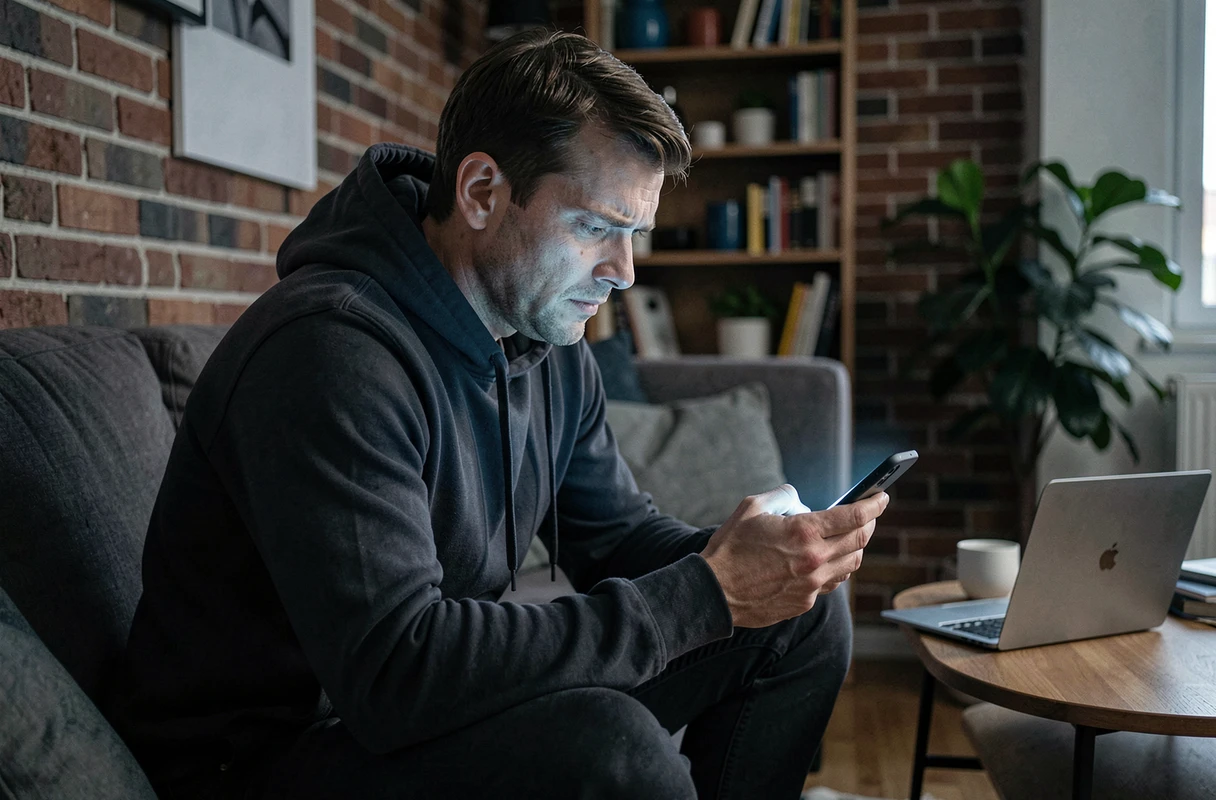
The data collected during registration (email address, password) then circulates outside the platform’s perimeter. If a user reuses the same password on other services, the exposure extends to all their accounts. The leak of a forum’s database exposes its members as much as the creators whose content has been stolen.
- Always systematically check the exact URL of the site before any interaction (mirror domains use similar typographic variants)
- Never reuse a password already used on another service
- Consider that any data transmitted to this type of platform is potentially compromised from the moment of sending
- Use a URL verification tool (like those offered by antivirus solution providers) before clicking on a link from these forums
Prosecutions against leak visitors: what judicial precedents say
No wave of mass prosecutions against simple visitors of leak forums has been documented in France. Judicial means are concentrated on infrastructures: hosts, administrators, recurring uploaders. The CNIL, for example, has requested the blocking of sites distributing stolen health data, but the procedures targeted the site’s operators, not individual visitors.
This asymmetry does not guarantee lasting protection. Legislative evolution tends to strengthen the responsibility of intermediaries and active users. A user who posts “requests” for specific content, comments, or shares links exceeds the status of a mere passive visitor and enters a zone of tangible criminal responsibility.
We recommend clearly distinguishing three situations: one-time consultation without interaction (almost no criminal risk, high technical risk), registration with participation in forums (low but not zero criminal risk, strong traceability), and payment or uploading of content (real and documented criminal risk). The boundary between these categories determines the essence of a user’s actual legal exposure in relation to Leakimedia.