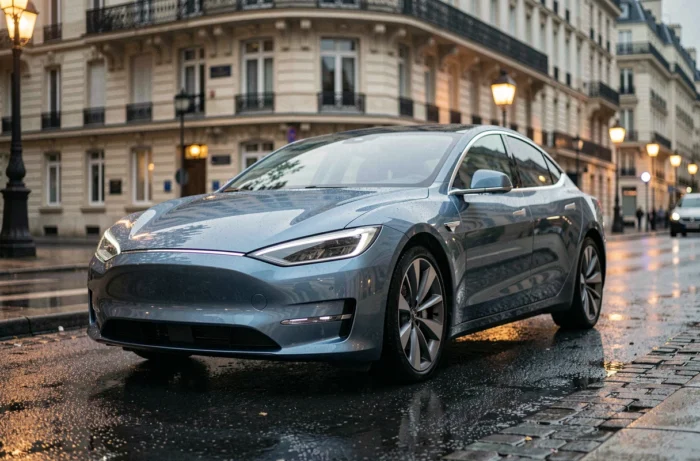
The French automotive market ended 2024 with a paradox. Sales of new electric and plug-in hybrid vehicles accounted for 25.7% of the market, down from 26.2% in 2023 according to the Statistical Data and Studies Service (SDES). At the same time, the circulation of gasoline, gas, and electric cars was increasing, while diesel continued to decline. This discrepancy between new registrations and the rolling stock summarizes the tensions that have affected the automotive sector this year.
European anti-dumping duties on Chinese electric vehicles
The European Union has imposed anti-dumping duties on electric cars manufactured in China, which came into effect on October 30, 2024, for a period of five years. These taxes are in addition to the standard customs duty and vary by manufacturer. Manufacturers that did not cooperate with the investigation face the highest rates.
Have you noticed that some Chinese electric SUVs were displaying very aggressive prices at dealerships? This pricing competitiveness was partly based on public subsidies that the European Commission deemed unfair. The anti-dumping duties aim to restore competitive balance in the European market.
One detail changes the game: plug-in hybrids and conventional hybrids are not subject to these taxes. This regulatory asymmetry is already prompting some Chinese manufacturers to shift their offerings toward hybrid powertrains rather than fully electric ones.
To keep track of these developments in the automotive market on a daily basis, a useful resource is: https://autoscoop.fr.
Hybrid powertrains: why they dominate sales in France
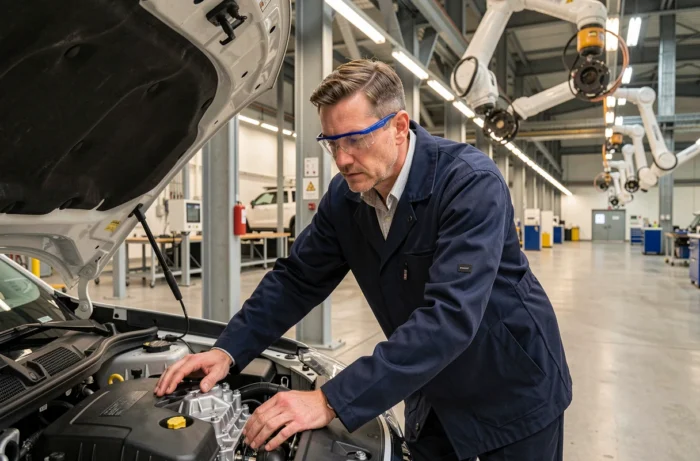
Hybrid powertrains (including mild and plug-in hybrids) now represent a majority share of new registrations in France. Why this choice over fully electric?
The answer lies in two words: range and versatility. A conventional hybrid does not require any charging station. A plug-in hybrid allows for electric driving on short trips, then switches to gasoline for longer journeys. This flexibility reassures buyers who are still hesitant to make the leap to fully electric.
European manufacturers have understood this well. Renault, for example, has expanded its range of E-Tech hybrid models. European CO2 emissions standards push each brand to reduce the average of its new fleet. Offering hybrids allows for lowering this average without relying entirely on electric vehicle sales.
Pure thermal (gasoline or diesel without electric assistance) is mechanically declining in catalogs. Manufacturers that maintain 100% thermal models do so mainly in high-margin segments or in export markets outside Europe.
Charging infrastructure: the concrete barrier to electric
Battery range is improving, but the charging network remains the main friction point for potential electric vehicle buyers. The issue is not so much the number of charging stations as their reliability and geographical distribution.
- Fast charging stations (capable of charging a battery to over 80% in less than half an hour) remain concentrated along highways and in major urban areas. Rural areas are still under-equipped.
- Compatibility between different charging networks complicates the user experience. Several subscriptions or apps are sometimes necessary for a single long-distance trip.
These obstacles partly explain the stagnation of new electric vehicle market share in 2024. Buyers who make the leap generally have a home charging solution (single-family home with wallbox). For others, hybrids remain the most practical compromise.
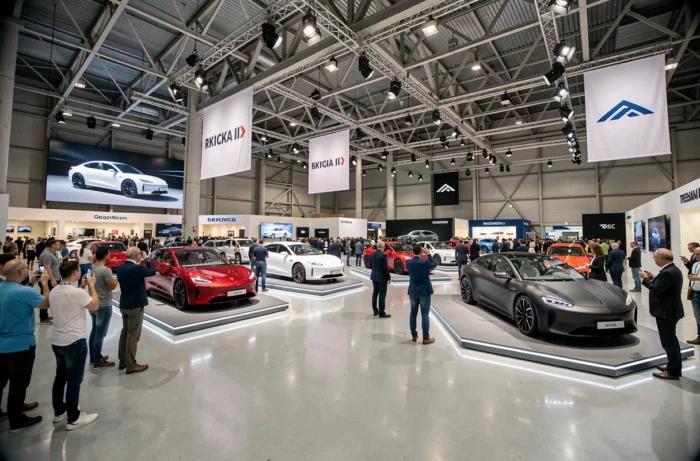
European battery regulation and its impact on prices
Regulatory requirements for battery manufacturing are likely to increase the production costs of electric vehicles. For a market where the purchase cost is already the primary barrier, this potential increase is significant.
Manufacturers have several levers to absorb this extra cost:
- Investing in European gigafactories to secure supply and reduce logistical costs in the medium term.
- Developing alternative battery chemistries (sodium-ion, cobalt-free LFP) that are less dependent on critical imported materials.
- Passing part of the extra cost onto the sale price, which could further hinder the adoption of electric vehicles by middle-income households.
Price remains the decisive factor for the majority of car buyers. Purchase incentives (ecological bonuses, social leasing) play a compensatory role, but their sustainability depends on the budgetary decisions of each member state.
The automotive market in 2024 can be summarized as a tension between strong European regulatory ambitions and economic realities that slow down the transition. Hybrids are establishing themselves as the pivot powertrain, Chinese electric vehicles are reshuffling the pricing deck, and charging infrastructure remains the weak link in the shift to fully electric. The decisions made in the coming months, between customs duties, battery standards, and charging station deployment, will determine the actual pace of this transformation.