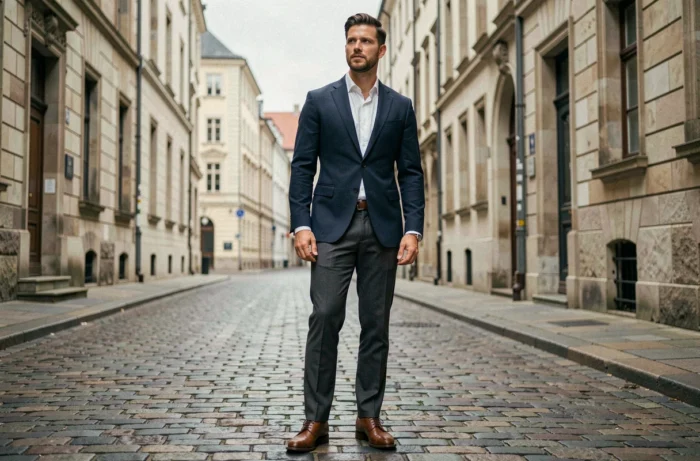
Men’s style is built on a simple principle: a well-curated wardrobe isn’t measured by the number of items you buy, but by how versatile and long-lasting they are. Caring for, repairing and buying second-hand have become integral parts of a considered approach to style, just like choosing a cut or a colour. This article explains how to build a cohesive men’s wardrobe around that idea.
Care and repairs: the foundation of a durable men’s wardrobe
Before thinking about trends or silhouettes, the first style skill to master is making the most of what you already own. Making your clothes last is as much a style choice as a practical one. Raw denim that develops a patina, a wool jacket brushed after every wear, leather shoes polished regularly: these habits build a wardrobe that gains character over time.
In practice, three common alterations are enough to extend the life of most men’s clothing: hemming a pair of trousers, replacing a shirt button and having a pair of derbies resoled. These repairs cost a fraction of the price of a replacement and preserve the wardrobe’s visual identity.
The main obstacle is the perceived cost of repairs. The French cite them as one way to consume less textile, while also pointing to cost and habits as barriers.
The decision is simple: if an item is well made and the repair costs less than a third of its new price, it’s worth keeping. A wool blazer or a pair of Goodyear-welted boots will almost always pass this test. A basic fine-cotton T-shirt rarely will.
To explore this mindset further and find practical inspiration, Monsieur Magazine’s fashion section regularly highlights pieces that stand the test of time without going out of style.
Second-hand menswear: creating a personal style with new and pre-owned pieces
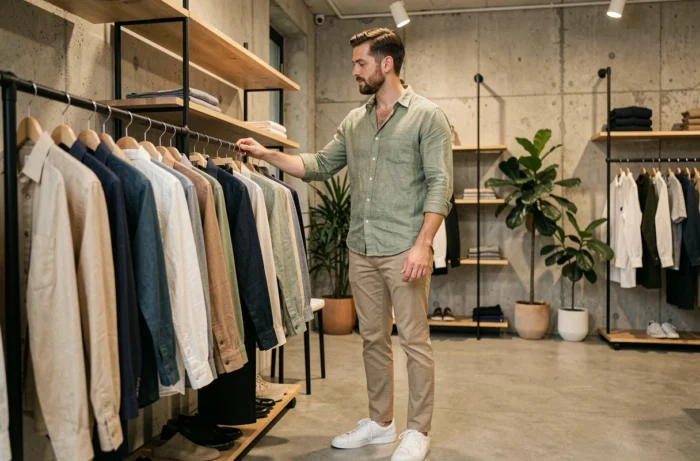
Second-hand clothing already accounts for a significant share of apparel purchases in France, driven mainly by peer-to-peer platforms. For men’s fashion, this changes the game: mixing new and pre-owned pieces lets you build a richer wardrobe on the same budget, while giving you access to items you won’t find in stores.
Some categories are particularly well suited to second-hand shopping:
- Coats and structured jackets (overcoats, trench coats, blazers) hold their shape if stored properly, and their new price rarely makes them an obvious first purchase.
- Leather shoes with Goodyear or Blake construction can be resoled and restored to near-new condition by a cobbler.
- Leather accessories (belts, bags, wallets) develop a patina over time and gain character.
By contrast, fine knits (T-shirts, undershirts) and underwear are best bought new: they wear out quickly, and their condition is difficult to assess online.
The key is to think of style as an ensemble, not a catalogue of identical basics. A pair of flannel trousers found in a vintage shop, worn with new sneakers and a linen overshirt bought on sale: combinations like this create a visual identity no one else can replicate.
Building a cohesive men’s silhouette: cuts, proportions and colours
Owning good pieces isn’t enough if they don’t work together. A cohesive men’s look rests on three technical factors: cut, proportions and colour palette.
Cut and body shape
A well-cut garment isn’t a tight one. The right fit follows the body’s lines without constricting them. The shoulder seam of a jacket should sit directly over the shoulder bone. Straight or slightly tapered trousers suit most men, while overly tight slim fits can quickly look dated.
Alterations play a central role. A second-hand pair of trousers that fits at the waist but is too long can be transformed into a made-to-measure piece for the price of a hem.
Proportions in an outfit
The most useful everyday rule can be summed up in one sentence: balance the volume between the upper and lower body. A loose top (an overshirt or oversized jacket) calls for a more fitted bottom. Wide-leg trousers work better with a structured, close-fitting top. Layering two loose-fitting pieces can overwhelm the silhouette; layering two tight-fitting ones can make it look rigid.
Colour palette for an everyday wardrobe
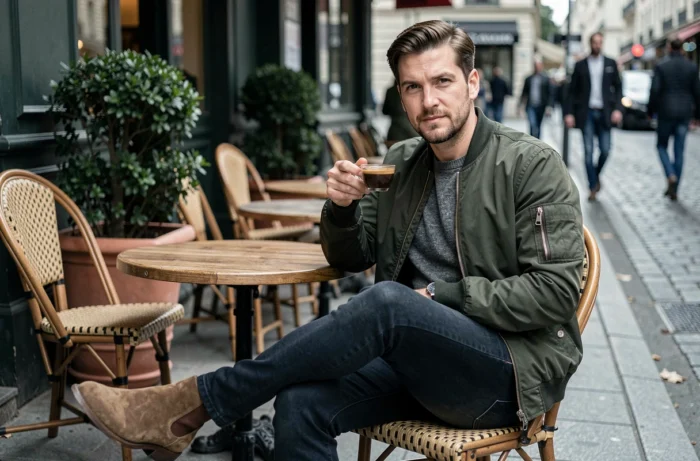
A functional men’s wardrobe is built around three or four neutral colours (navy, grey, off-white, beige), complemented by one or two accent colours. Burgundy, olive green and sky blue all work well without making an outfit look like a stage costume. Every neutral piece should go with at least three other items in your wardrobe: use this versatility test before making any purchase.
Men’s fashion trends and textile regulations: what’s changing in practice
Everyday style is also evolving in response to European regulations. The ESPR Regulation, adopted in 2024, sets out information requirements for textile products, with a delegated act covering textiles expected in 2027. The details and implementation dates have yet to be confirmed, but the direction is clear: greater transparency about the composition and durability of clothing sold in Europe.
For consumers, this means that comparing the quality of two shirts or two pairs of sneakers should eventually become easier. In the meantime, a few habits can help you make informed choices: check the composition on the label (a mostly natural fabric is easier to repair and tends to age better than a 100% synthetic one), favour brands that disclose where their products are made, and be wary of unusually low prices, which often signal poor construction.
Clothing rental, sometimes presented as an alternative, is better suited to occasional needs (a formal suit or an outfit for an event) than to building an everyday wardrobe. Developing your style still means owning pieces you know, care for and adapt to your life.
Developing your everyday style doesn’t require an enormous budget or constant wardrobe updates. A collection of well-cut pieces, carefully maintained and complemented by second-hand finds, makes for a more personal and durable wardrobe than any collection dictated by seasonal trends. Before buying anything, the most useful final check is also the simplest: make sure the new piece works with at least three items already in your wardrobe.