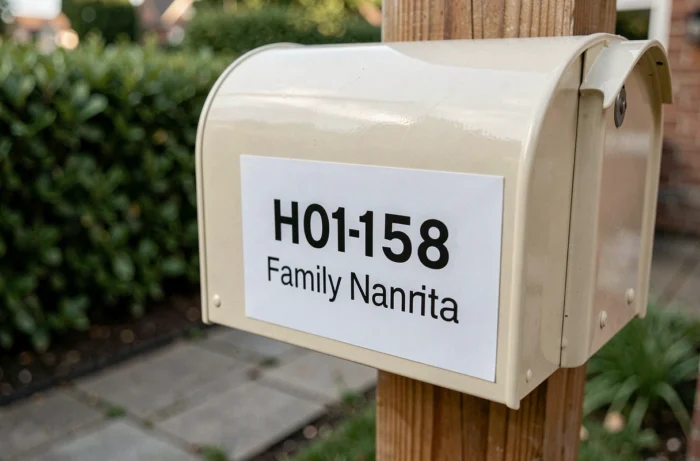
A tenant moves out, a new one moves in, and the label stuck to the mailbox refuses to come off cleanly. The result: adhesive residue, chipped paint, and a damaged surface. Creating a legible, weather-resistant mailbox label involves more than choosing an attractive font. The material, adhesive, finish, and application method all determine how long the label lasts and what condition the mailbox will be in when it needs replacing.
Replacing a mailbox label without damaging the surface
This step is often overlooked: the old label needs to come off before a new one can be applied. On a painted metal mailbox, permanent adhesive leaves marks that can quickly turn into scratches if you try to scrape them off.
The most reliable solution is to choose a repositionable or removable adhesive from the outset. Some manufacturers of engraved PVC plaques offer a self-adhesive backing designed to come off without leaving residue. Another option is magnetic mounting: a thin magnetic plate can be attached to and removed from any ferrous surface in a second, without any glue.
If you inherit a mailbox with residue from an old label, a cloth soaked in isopropyl alcohol or vegetable oil will soften the adhesive in a few minutes. Then wipe it away with a microfiber cloth—never use an abrasive sponge, which can scratch the metal. Before learning how to create a durable mailbox label, save time by preparing the surface properly.
How well the adhesive holds depends directly on the mailbox’s actual condition. A performance claim based on a smooth laboratory surface means little when applied to textured, dusty, or weathered metal. Cleaning, degreasing, and drying the surface before application is the one precaution that always works.
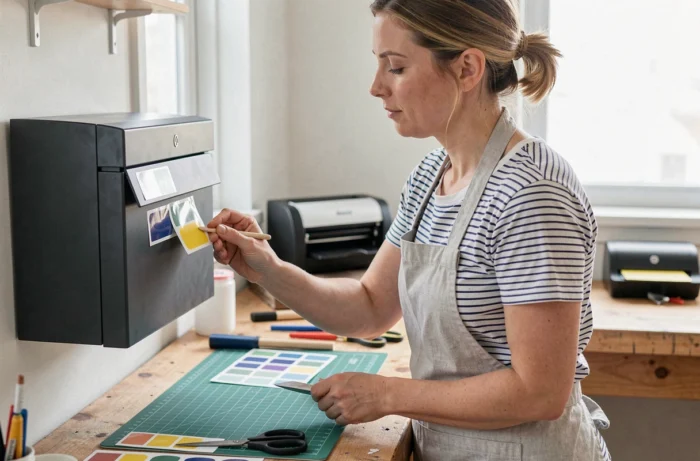
Mailbox label materials: vinyl, engraved PVC, or aluminum
Paper covered with clear tape won’t last a season. At the first prolonged downpour, water seeps in around the edges, the paper buckles, and the ink runs. Instead, choose from three types of material that are genuinely suited to outdoor use.
Laminated adhesive vinyl
White or clear inkjet-printed vinyl covered with a laminating film stands up well to splashes. Cut it to fit the mailbox’s label slot. Its advantages are its low cost and ease of replacement. Its drawback: lamination protects against water, but not necessarily UV rays. Left in direct sunlight without protection, vinyl can yellow or fade after a few seasons.
Engraved PVC plaque
Double-layer engraved PVC offers a much higher level of durability. The text is engraved into the material rather than printed on top, making it resistant to abrasion. Thickness varies by size, and common color combinations (gray/black, gold/black, black/white) suit most mailboxes. PVC withstands UV rays and the elements for years.
Anodized aluminum plaque
For apartment buildings or coastal environments, engraved anodized aluminum is the most durable option. It won’t rust or yellow and can withstand significant temperature fluctuations. It costs more, but its long lifespan more than makes up for the difference over time.
- Laminated vinyl: affordable and easy to replace, but vulnerable to prolonged UV exposure
- Engraved PVC: good balance of durability and price, with indelible text; suitable for most uses
- Anodized aluminum: maximum durability, ideal for coastal areas or demanding apartment buildings
Typography and legibility: what the mail carrier can read in two seconds
An elegant label that can’t be read from a meter away misses the point. Mail carriers, delivery drivers, and neighbors should be able to identify the name at a glance, even in low light.
Choose a sans-serif font in a large enough size to keep the name legible even on the narrow format of a mailbox slot. Arial, Helvetica, or a similarly simple font works better than decorative handwriting. Keep the label to two or, at most, three lines: last name, first names if desired, and “No junk mail” if needed.
Text-to-background contrast matters more than the color itself. Black on white, white on black, or black on light gray remain legible from a distance and in all lighting conditions. Gold text on a cream background may look elegant on screen, but becomes hard to read in angled light.
In apartment buildings, the property manager may require uniform dimensions, colors, and typography for all mailboxes. Before ordering, check the building’s rules to avoid having to order another plaque a few weeks later.
Address and regulations: updating your label after a change
A label can be perfectly durable and still display outdated information. France’s 3DS Law of February 21, 2022, made street naming and house numbering mandatory in all municipalities. The decree of August 11, 2023, sets out the requirements for updating address data.
In practice, if the municipality has renamed a street or changed the numbering, the old address on the label could lead to delivery errors. Check with the town hall that the address is up to date before engraving or printing anything.
For tenants who move frequently, a magnetic solution or a slide-in label holder built into the mailbox makes replacement instant. No glue, no residue, and no damage to the door.
- Check the official address with the town hall before placing an order
- Choose a removable mounting system if name changes are likely
- In an apartment building, ask the property manager which label design is required before buying
A well-designed mailbox label combines a material suited to its exposure, an adhesive or mounting system designed with future replacement in mind, and text that can be read from a distance. The choice of material depends mainly on where the mailbox is located: laminated vinyl is enough under a sheltered porch; in direct sunlight or exposed to sea spray, engraved PVC or anodized aluminum remain the most reliable options.