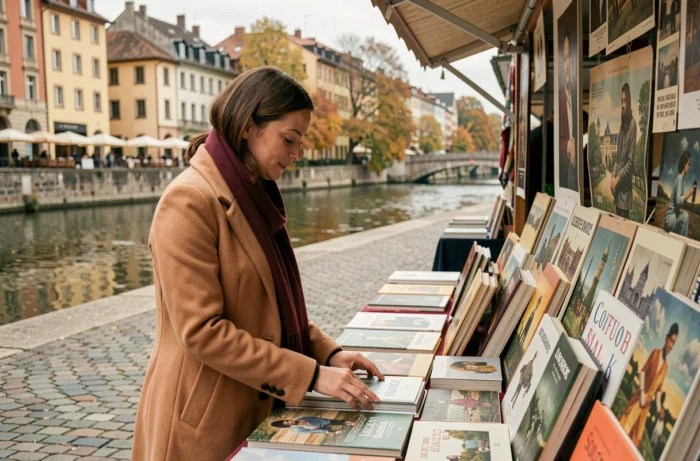
Lyon concentrates a dense array of cultural facilities within a compact area, generating a continuous flow of proposals, from visual arts to live performances. However, the cultural news in Lyon is not limited to an agenda of outings: it reflects economic dynamics, political choices, and urban transformations that reshape the map of the metropolis.
Following the news on Gone Magazine allows one to identify these underlying movements as well as the occasional events, by intersecting cultural outings and local trends.
Funding for Culture in Lyon: A Model Under Pressure
Before exploring the current events, a structural fact deserves to be highlighted. Several cultural institutions in Lyon have been weakened or have disappeared in recent years. The Woodstower festival no longer exists. The Bron Book Fair has ceased. The International City of Gastronomy has closed its doors.
The project for the Ninkasi venue in Oullins has been abandoned, and uncertainties loom over La Rayonne, the Opera, the Auditorium, and the TNP. This list is not trivial: it signals a drought in cultural funding that simultaneously affects public, private, and associative actors.
In the face of this budget contraction, institutions are increasingly turning to private sponsorship to maintain their activities. Le Petit Bulletin recently posed the question in these terms: can culture really count on sponsors? The answer is not clear-cut. Sponsorship partially compensates for cuts in grants, but it introduces a dependency on economic cycles that the institutions cannot control.
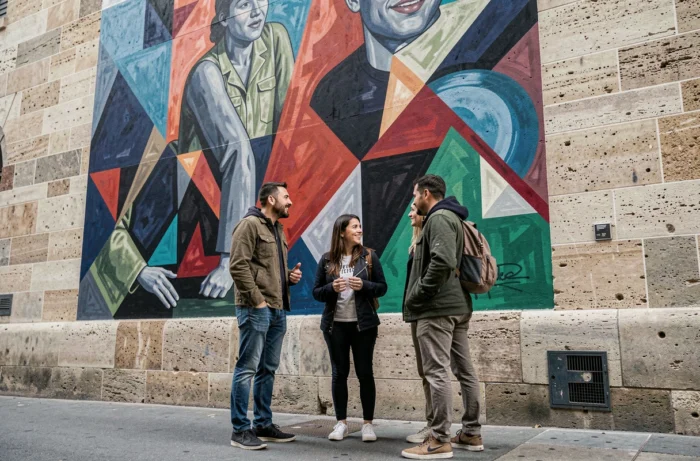
This context concretely alters the cultural offer. Small venues for contemporary music, identified as Lyon’s “emergence,” are under threat. When a festival disappears, it is also developing artists who lose a space for dissemination, and an audience that loses an appointment.
Contemporary Art Biennale 2026: A Fragmented Edition Across the Metropolis
The 18th edition of the Lyon Contemporary Art Biennale, open from September 19 to December 13, 2026, illustrates a trend that goes beyond the artistic field: the decentralization of major cultural events.
This Biennale is not confined to macLYON or a single location. It invests the Grandes Locos, the Textile Museum, the Contemporary Art Institute of Villeurbanne, with interventions in several municipalities of the metropolis. Le Monde described this edition as a dialogue between art and economy, an unusual angle for a contemporary art event.
Why This Geographical Dispersion Matters
Distributing a biennale across multiple sites transforms the way the public experiences it. Instead of a single visit to one building, the spectator moves between neighborhoods with distinct identities. The Grandes Locos, a former industrial site, do not offer the same experience as the rooms of the Textile Museum.
This route logic also encourages visits to places that are usually less frequented. For peripheral municipalities, hosting part of the Biennale generates visibility that their local programming does not always produce.
- The Grandes Locos host installations that exploit the volumes of the industrial site, with works that are difficult to transpose into a traditional museum.
- macLYON remains the institutional anchor point of the Biennale, with a program that interacts with its permanent collection.
- The Contemporary Art Institute of Villeurbanne provides a distinct perspective, rooted in research and artistic production.
- The Textile Museum offers a heritage setting where contemporary works resonate with historical textile collections.
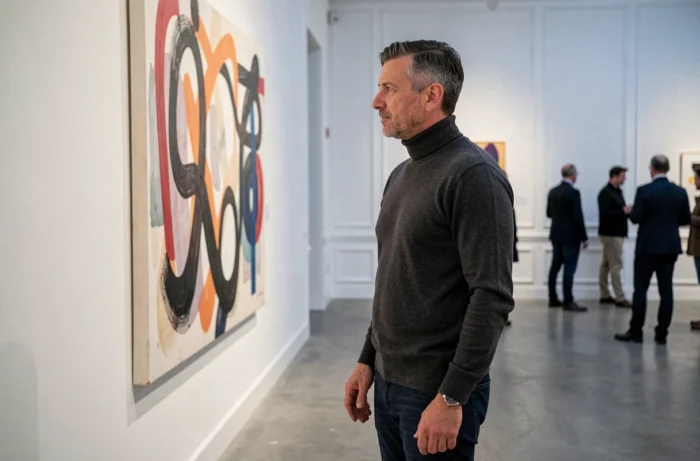
Live Performance and Outings in Lyon: What Shapes the New Season
Beyond the Biennale, the Lyon cultural season is characterized by the density of its live performance offerings. Theater, music, cinema: the programming for September and October forms a tight calendar where proposals overlap.
Cinema remains a pillar of weekday outings, with independent theaters maintaining an art and experimental programming in the face of multiplex dominance. Neighborhood festivals renew the offer by proposing short and accessible formats: Curieux Détours in Villeurbanne, Rentrée buissonnière in Oullins, all events that rely on geographical proximity.
Contemporary Music: A Sector Under Strain
Small contemporary music venues are going through a difficult period in Lyon. The economic fragility of these places raises a concrete question: where do developing artists perform when venues close? Major venues (Auditorium, venues in the Presqu’île) program established artists. Festivals host headliners.
Between these two poles, mid-capacity venues serve as a springboard. Their gradual disappearance creates a gap in the music dissemination chain. This phenomenon is not unique to Lyon, but the metropolis is experiencing it with particular intensity given the number of affected structures simultaneously.
Cultural Trends in Lyon: What the 2026 Season Reveals
Three trends emerge from this Lyon cultural season:
- The search for private sponsorship is accelerating, indicating that the model of solely public funding is no longer sufficient to support the local cultural ecosystem.
- Major events are leaving institutional walls to invest in wastelands, peripheral municipalities, and heritage sites repurposed from their original function.
- Small venues and neighborhood festivals are playing an increasingly important role in renewing the offer, but their economic model remains precarious.
These dynamics are reshaping the cultural map of Lyon. The richness of the programming sometimes masks the fragility of the structures that support it. A festival like Woodstower can disappear in a few months, reminding us that the cultural abundance of a metropolis is never guaranteed.
The next season will reveal whether reliance on sponsorship and the decentralization of events are sufficient to maintain the diversity of offerings, or if Lyon will need to invent other mechanisms to preserve its cultural fabric.