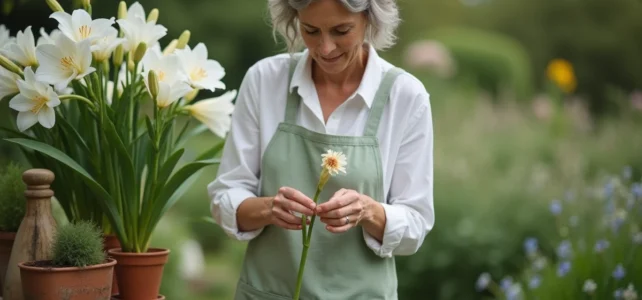
Lily pollen stains textiles, fingers, and petals in a nearly irreversible way. This orange or brown powder, produced by the stamens (the male organs bearing the anthers), is released as soon as the flower opens. Removing these stamens, and sometimes the pistil, is the basic technical gesture to keep a bouquet clean and vibrant for longer.
Stamens, pistil, anthers: quick anatomy of the lily
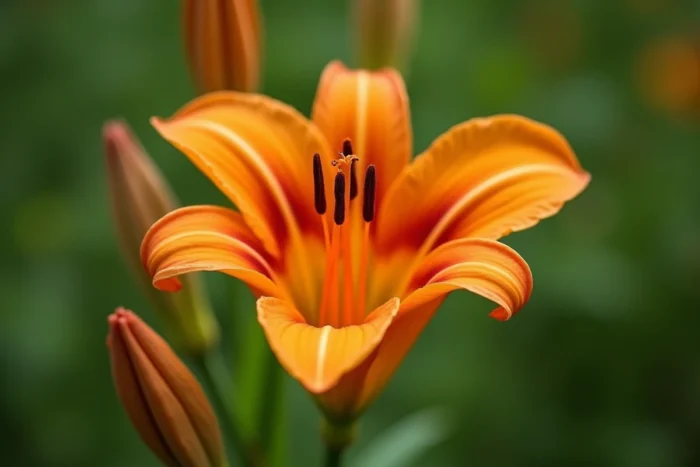
Before cutting anything, distinguishing the parts involved helps avoid mistakes. At the center of each lily flower stands the pistil, the female organ composed of the sticky stigma, the elongated style, and the ovary at the base. Surrounding it, six stamens each bear an anther loaded with pollen.
The staining pollen comes exclusively from the anthers. The pistil does not produce any coloring powder. Confusion between the two is common, which explains why some guides recommend removing everything when the problem is limited to the stamens.
On a vase bouquet, the decision to cut the pistil of the lilies depends on the desired aesthetic result. Removing the pistil gives a more streamlined flower center, but the action has no effect on stains since only the stamens are responsible.
Lily pollen: why the stains are so stubborn
Lily pollen contains liposoluble carotenoid pigments. Upon contact with a fabric, these pigments penetrate the fibers and resist regular washing with water. Rubbing worsens the situation by pushing the powder deeper into the textile.
On the petals themselves, the pollen falling from the anthers creates brownish marks. These traces diminish the beauty of the bouquet long before the flowers wilt. This is the main reason why florists systematically remove the anthers from floral arrangements intended for indoors.
The best time to remove the stamens is just after the flower opens, when the anthers are still slightly moist and the pollen is not yet powdery. At this stage, the risk of dispersion is minimal.
Removing the stamens from the lily without damaging the petals
The action is simple, but the method changes the result. Here are the steps to follow for clean flowers:
- Wait for the bud to start opening, without forcing the bloom. The petals should detach naturally to allow access to the center of the flower.
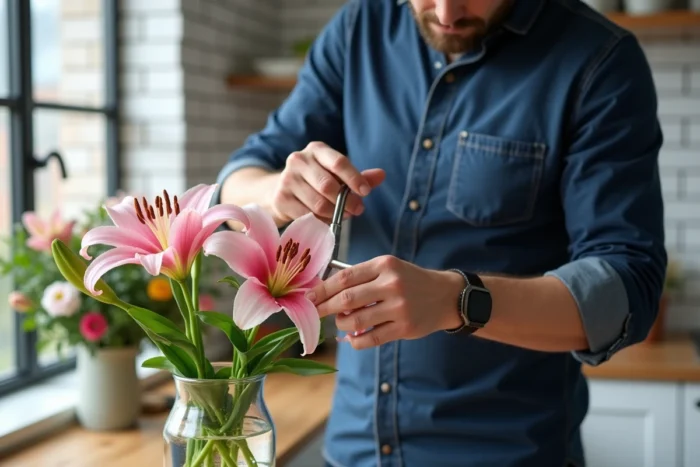
- Hold each stamen at the base of the anther with your fingers or tweezers, then gently pull outward. The movement should be firm to avoid breaking the anther and releasing pollen.
- Protect the work area with newspaper or absorbent paper, as a few grains of pollen will fall despite precautions.
- Avoid touching the petals with fingers that have already come into contact with pollen. Marks on white petals are particularly visible and difficult to erase.
If pollen falls on clothing, do not rub. A piece of adhesive tape pressed onto the dry area lifts most of the grains before they embed.
Should the pistil also be cut?
On an indoor bouquet, removing the pistil is purely an aesthetic choice. Some floral arrangements gain visual clarity without this central stem. Others lose character, as the pistil contributes to the typical silhouette of the lily.
The pistil produces neither pollen nor staining substance. Keeping it has no practical disadvantages on a cut bouquet. The lifespan of the flowers in the vase does not change whether it is removed or not.
Lilies in the garden: should the stamens be left for pollinators?
The question arises differently for lilies grown in the ground. Lilies are among the flowers that are highly visited by bees and bumblebees, which collect the pollen and nectar produced by the flower.
Systematically removing the stamens from garden lilies deprives these insects of a food resource. Florists now prioritize the removal of stamens only on cut flowers, leaving those intact in the garden.
This distinction between cut flowers and garden flowers is rarely mentioned in standard care guides. However, it has a direct impact on local biodiversity, especially in urban gardens where pollen sources are dwindling.
Pollen and allergies indoors
Lily pollen is increasingly seen as a potential irritant for sensitive or asthmatic individuals. In an enclosed space, airborne pollen grains can trigger reactions in allergic individuals.
For a bouquet intended for a bedroom or a poorly ventilated living room, removing the anthers reduces both stains and exposure to allergens. This precaution is particularly important for oriental varieties, whose anthers produce a higher amount of pollen than Asian hybrids.
Care for the lily bouquet after removing the stamens
Once the stamens are removed, a few actions can extend the life of the bouquet and maintain the beauty of the petals:
- Change the water in the vase every two days and re-cut the stems at an angle to maintain good hydration.
- Place the bouquet out of direct sunlight and heat sources, which accelerate blooming and thus wilting.
- Remove wilted flowers as they appear. Lilies open sequentially on the same stem, and a dead flower produces ethylene that accelerates the aging of neighboring buds.
The environment also plays a role: moderate ambient humidity and a cool temperature (avoiding proximity to a radiator or a sunny window) allow the flowers to last significantly longer.
The action of removing the stamens takes a few seconds per flower and transforms the appearance of a lily bouquet. As for the pistil, the decision remains a matter of personal taste, with no impact on cleanliness or longevity of the cut flowers. The reflex to keep: intervene as soon as the bud opens, before the pollen starts to disperse.