The mid-market segment is reshaping the fashion landscape faster than any seasonal collection. While fast fashion is losing ground among young consumers, brands positioned between low-cost and luxury are now capturing the fastest growth in the sector. Understanding these dynamics allows for the construction of a sustainable style, far from accelerated obsolescence cycles.
Mid-market fashion: the segment that redistributes clothing codes
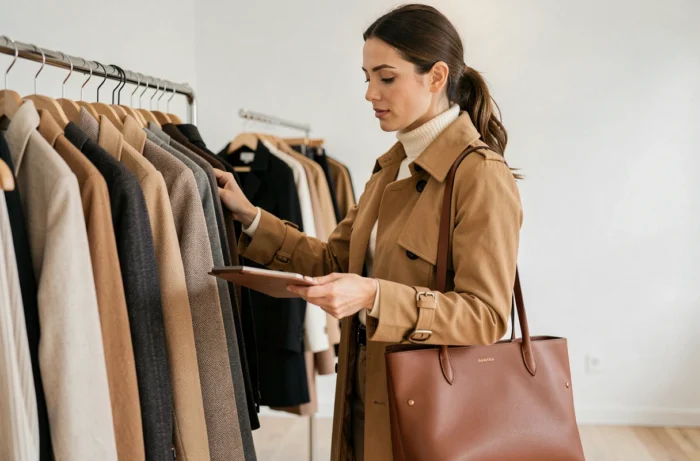
The mid-market is not just about an intermediate pricing position. It reflects a precise requirement: carefully crafted design, controlled materials, accessible prices without sacrificing fit. Brands in this segment invest in more limited collections, with pieces designed to last through multiple seasons.
We observe that this rise coincides with a growing rejection of constant renewal. Consumers, particularly Generation Z, prefer to acquire fewer but better-constructed garments. McKinsey and Business of Fashion’s State of Fashion 2026 report identifies the mid-market as the fastest-growing category in fashion.
This repositioning has direct consequences on style. Mid-market collections favor more stable colors, reinterpreted classic cuts, and mixed materials (cotton-linen, blended wool) that provide a proper drape without requiring a luxury budget. To keep up with these developments and refine choices, the fashion space on Point Contre Point offers regular analyses on the underlying movements in the sector.
Second-hand and upcycling: two pillars of a unique style
Second-hand is no longer a militant gesture reserved for insiders. It has now become a central component of building a personal wardrobe. Online resale platforms are experiencing continuous growth, and the global fashion resale market is reaching record levels.
Why second-hand is changing the way we dress
Buying second-hand requires developing an eye. One does not browse a linear catalog organized by trend: one digs, compares cuts, evaluates the condition of a material. This process cultivates taste far more effectively than a recommendation algorithm.
The result is a less formatted style. Vintage or second-hand pieces bring cutting details, colors, and textures absent from current shelves. It is this productive friction that distinguishes a curated wardrobe from a consumed one.
Upcycling: from DIY to design technique
Upcycling has left the realm of amateur DIY. On Pinterest, searches related to refashioning and transforming existing garments have seen increases of several hundred percent over the past year. Queries around upcycle crochet or shirt repurposing illustrate an underlying movement.
Transforming an existing piece requires an understanding of pattern-making that new purchases do not demand. Shortening a vintage pleated pant, restructuring the shoulders of an oversized blazer, adding a contrasting panel to a denim jacket: these technical gestures produce unique pieces and develop a concrete textile culture.
Building a coherent wardrobe: materials, colors, and proportions
Seasonal trends offer directions. But a personal style relies on three technical parameters that we recommend mastering before following a trend book.
- Materials dictate drape and longevity. A dense-weight cotton retains its shape after washing, while lightweight polyester distorts in a few months. Prioritizing natural fibers or predominantly natural blends ensures better durability over time.
- Colors work in thermal families. Building a wardrobe base around two or three compatible neutral shades (medium gray, navy, ecru for example) allows for the later integration of strong pieces without visual disruption.
- Proportions determine overall appearance more than any print. A wide pant calls for a fitted or semi-fitted top. An oversized top works with a structured bottom. This rule of volumetric contrast remains the foundation of any mastered silhouette.
Fashion inspirations for women and men: going beyond the seasonal catalog
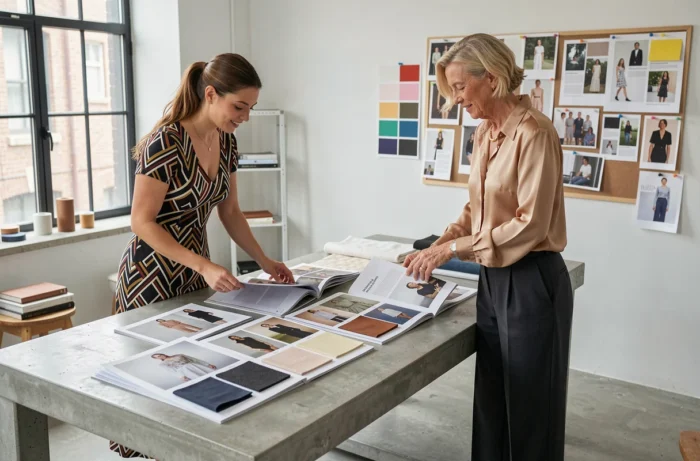
Fashion Weeks and textile fairs like Texworld remain professional sources of information. The trend books that arise from them guide commercial collections on upcoming colors, patterns, and materials. For the autumn-winter season, the announced palettes revolve around deep shades and enveloping textures.
But the most fertile inspiration comes from the intersection of top-down sources and bottom-up practices. Observing what upcycling communities, specialized thrift stores, or independent creators produce allows for capturing signals that major trend books formalize only months later.
Three filters to sort useful trends
Not all trends deserve a place in a wardrobe. We recommend applying a simple filter before any purchase:
- Is the trend compatible with at least three pieces already in your wardrobe? If not, it generates a cascading purchase.
- Can the trendy piece be worn in at least two different contexts (work and weekend, for example)? A single-use piece ends up forgotten.
- Will the material and cut withstand more than one season of regular use? A trendy but fragile garment remains a disposable purchase, even if paid dearly.
This filter eliminates the majority of impulses and concentrates the budget on pieces that truly enrich the wardrobe. Mid-market fashion, second-hand, and upcycling converge towards the same goal: a style built through thoughtful accumulation, not constant renewal. The trendiest garment remains the one you still wear in two years.