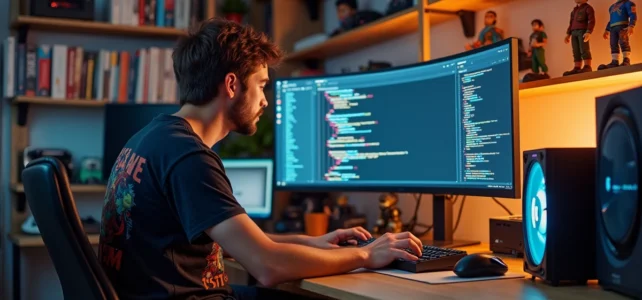
The geek universe is no longer limited to video games and gadgets. In 2026, technology enthusiasts navigate between AI agents capable of operating a smartphone, interfaces that blend into the background, and a pop culture that continues to nourish online communities. The scope is expanding, and the reference points are shifting rapidly.
Autonomous AI Agents: What Changes for Tech Enthusiasts
The most talked-about trend in tech circles this year has a technical name: agentic AI. The principle seems simple. An assistant no longer just answers a question; it plans a sequence of actions, executes it, and adapts based on the results obtained, with minimal human intervention.
According to analyses published by InformedClearly, the AI assistant market could reach $25.6 billion, driven by the push towards multimodal and emotional assistants. Platforms like Gemini 3.5 Pro illustrate this shift: the assistant manages bookings, compares product offers, summarizes discussion threads, all in natural language.
Publications from Wavestone and Igmguru confirm that multi-agent AIs are moving from the experimental stage to deployments in consumer products. On Nous les Geeks, this type of topic regularly fuels discussions among enthusiasts who test these tools daily.
Field feedback varies on this point: some users describe a real time-saving on repetitive tasks (sorting emails, tech watch synthesis), while others report contextual errors that require everything to be double-checked. Adoption remains uneven, and trust is built use after use.

Invisible Tech and Ambient Computing: The End of Ubiquitous Screens
Technology trend studies for 2026, particularly those from Wavestone and TrendHunter, describe a shift towards what analysts call invisible tech. The principle: interfaces recede, sensors and processors integrate into everyday objects, and interaction becomes ambient.
VL-Media speaks of a “technology of instinct,” where devices anticipate needs without waiting for explicit commands. In practice, this translates into connected clothing, lightweight glasses with discreet displays, or home sensors that adjust lighting and temperature without a visible control panel.
For high-tech enthusiasts, this evolution raises an interesting question: will the geek of tomorrow be the one who masters invisible interfaces? Geek culture has been built around screens, mechanical keyboards, and elaborate gaming setups. Ambient computing takes a counterpoint to this aesthetic.
The available data does not allow for conclusions about the actual speed of adoption. Prototypes presented at tech shows often remain far from commercially available products. However, the direction is clear: manufacturers are investing heavily in low-power chips and miniaturized sensors designed to disappear into furniture or textiles.
Geek Culture and Gaming in 2026: What Formats Dominate
Gaming remains the central pillar of geek culture, but consumption formats are transforming. Cloud gaming continues to progress, supported by more stable network infrastructures. Mixed reality video games are gaining ground without replacing console or PC gaming.
On the community side, specialized podcasts (like Mes Geeks et Moi, active for several years) coexist with shorter formats on social media. The pop culture trend is also manifested through merchandise, figurines, and collector’s editions that feed a loyal niche market.
What Captures the Attention of Tech Communities
- Gadget and high-tech product reviews remain the most shared content, especially when they compare alternatives at different price points
- Discussions around generative AI and its concrete applications (content creation, task automation) generate growing engagement
- Competitive gaming events and online tournaments continue to unite international communities, with hybrid formats combining in-person and streaming
Geek culture operates in cycles. A product launch or a technological announcement is enough to polarize attention for a few weeks before the next topic takes over. Continuous monitoring has become a community reflex, not a luxury.
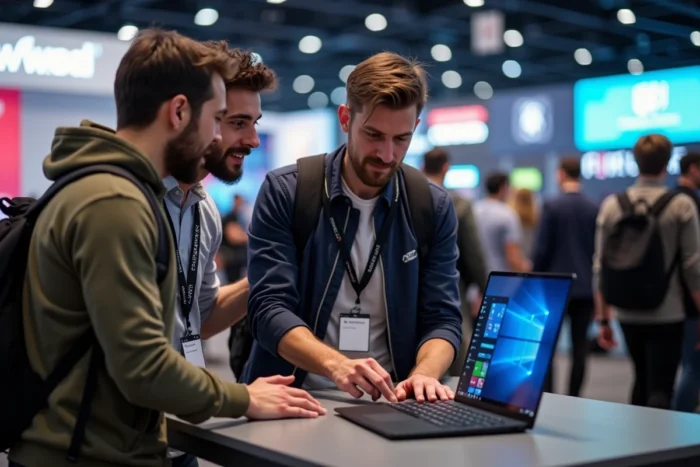
Gadgets and Tech Products: How Enthusiasts Filter the Offer
The volume of available tech products has never been higher. Between general marketplaces and specialized shops, choosing a relevant gadget requires a sorting effort that enthusiasts know well.
Selection criteria have evolved. Price-to-quality ratio remains central, but other parameters come into play:
- Compatibility with an existing ecosystem (smart home, voice assistant, gaming platform)
- Durability and repairability of the product, an increasingly present topic in tech forums
- The quality of documentation and community support, often more reliable than official support for niche products
A gadget without an active community loses its practical value within a few months. Enthusiasts know this: before buying, they check for the existence of a subreddit, a Discord server, or a dedicated wiki.
Independent review sites play a filtering role. However, the line between authentic reviews and sponsored content remains blurred on some platforms, pushing the most discerning readers towards community sources where experiences are verifiable.
The geek universe in 2026 is no longer defined by a single interest. It is organized around technical micro-communities, each with its own codes, monitoring tools, and evaluation criteria. Technology advances, enthusiasts adapt, and the community filter remains the best navigation tool in this abundant offering.