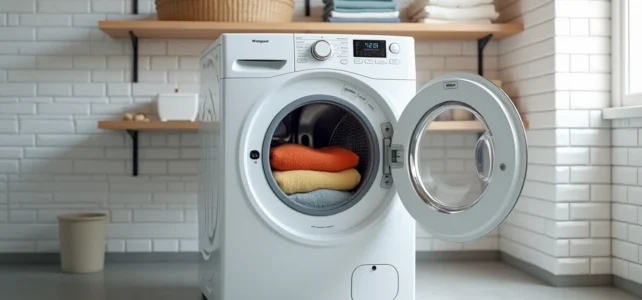
The 6th Sense technology from Whirlpool automatically adjusts washing parameters based on the load detected in the drum. On a 9 kg model, this adaptation involves three variables: water volume, cycle duration, and agitation intensity. Understanding how these adjustments work allows you to make the most of your energy bill.
6th Sense Sensors: What the Machine Measures Before Washing
Before the drum is fully filled, the 6th Sense sensors evaluate the weight of the laundry and its water absorption rate. The system deduces the strictly necessary amount of water and adjusts the duration of each phase (agitation, rinsing, spinning).
This detection has a direct consequence on consumption: a half-load will not consume the same amount of water or electricity as a full drum. The sensor recalibrates each cycle in real-time, meaning that two identical washes in terms of program but different in load will produce distinct durations and consumptions.
For this detection to remain reliable, the drum must turn freely. A packed load or items stuck against the door skews the initial weighing. Distributing the pieces evenly, without compressing them, gives the sensor a more accurate reading and avoids water overconsumption related to a poor weight estimate. The Whirlpool 6th Sense 9kg washing machine manual details the maximum loads by type of fabric, a useful reference to avoid underutilizing or overloading the drum.

Eco 40-60 Program: The Cycle to Prefer for Reducing Bills
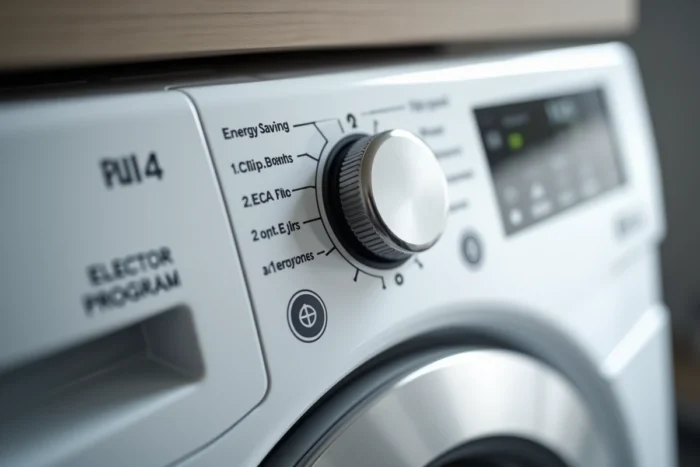
The Eco 40-60 program is designed to wash normally soiled textiles labeled 40 °C or 60 °C in the same cycle. Its particularity: it extends the washing duration to compensate for a lower water temperature. The laundry soaks and agitates longer, but the heater uses less energy.
On a 9 kg A-class washing machine, recent comparative data places consumption around 34 to 50 kWh for 100 cycles in the Eco 40-60 program, with about 50 liters of water per cycle. These figures help position the performance of your Whirlpool 6th Sense against the market average.
Why the Eco Cycle Lasts Longer
An Eco cycle can exceed two hours where a standard cotton program at 60 °C runs in an hour and a half. This extended duration may be surprising, but the energy calculation remains favorable: heating the water represents the majority of the electricity consumed by a washing machine. Reducing the temperature by a few degrees has more impact on the bill than shortening the agitation duration.
The Eco program is not suitable for all situations. Very dirty or grease-stained textiles require a higher temperature for the detergent’s surfactants to work effectively. Reserving the Eco cycle for regular laundry (worn for a day, lightly soiled) and switching to a cotton 60 °C program for sheets, towels, or heavily soiled sportswear remains the most coherent strategy.
Washing Temperature and Impact on Electricity Consumption
Reducing from 60 °C to 30 °C significantly divides the energy needed to heat the water. Data published by Selectra and Engie in 2025-2026 confirms that temperature is the main lever for reducing consumption on a washing machine, far ahead of spin speed or cycle duration.
On a Whirlpool 6th Sense 9 kg, the Temperature button allows manual adjustment down to 20 °C or 30 °C on most programs. Combined with the 6th Sense sensors that adjust the water volume, this temperature reduction produces a significant cumulative effect on the annual bill.
- Lightly soiled colored laundry: 30 °C is sufficient in the vast majority of cases, as current liquid detergents are formulated to work at low temperatures.
- White cotton or towels: a 60 °C cycle remains relevant once a week for hygiene, but alternating with 40 °C limits consumption.
- Delicate textiles (wool, silk): the dedicated program already runs at low temperature, no additional adjustment needed.
Optimal Load for a 9 kg Drum: The Efficiency Point
A 9 kg drum does not need to be filled to the brim to operate efficiently. Industry specialists recommend aiming for about 80% of the maximum capacity to achieve the best energy efficiency per kilo of laundry washed.
Loading only 2 or 3 kg in a 9 kg drum remains more energy-consuming per kilo of laundry than grouping items to reach 7 kg. The 6th Sense sensors reduce consumption on a small load, but they do not fully compensate for the fixed cost of rotating the drum and minimally heating the water.
Group Laundry Instead of Multiplying Cycles
Running the machine four times a week with 4 kg loads consumes more than three cycles at 7 kg. Grouping laundry by fabric type (cotton, synthetic, delicate) and waiting to have a sufficient load before starting a program reduces the number of cycles without compromising wash quality.
- Cotton and linen: can fill the drum to full capacity (9 kg) without agitation issues.
- Synthetics: limit to about 4 kg, according to the program chart, as these textiles need more space to avoid wrinkling.
- Wool: reduced load (about 2 kg maximum) imposed by the dedicated program, to protect the fibers.
Washing Machine Maintenance and Energy Performance Preservation
A clogged drain filter or a limescale-laden detergent drawer forces the machine to compensate with longer cycle times and additional rinses. Cleaning the water filter once a month maintains drainage flow and prevents errors like “clogged water filter” displayed on the screen.
The drum itself accumulates detergent residues and bacteria, especially if washes are mostly done at low temperatures. Running an empty cycle at 60 °C or 90 °C once a month, without laundry and with a small dose of detergent, cleans the drum and seals. This maintenance cycle preserves the efficiency of the 6th Sense sensors, which measure water absorption more accurately on clean surfaces.
The door seal deserves special attention. Wiping the rubber after each cycle and leaving the door ajar between washes limits mold formation and unpleasant odors, without resorting to specific cleaning products.
A well-maintained Whirlpool 6th Sense 9 kg, used with the right temperature settings, retains its energy performance throughout its lifespan. Choosing the Eco program for everyday laundry, combined with a load close to 80% of the drum, constitutes the most effective setting duo for reducing consumption without sacrificing laundry cleanliness.